Yoshimi Kato
Yoshimi Kato VG10 Black Damascus 180mm Santoku
Yoshimi Kato VG10 Black Damascus 180mm Santoku
Couldn't load pickup availability
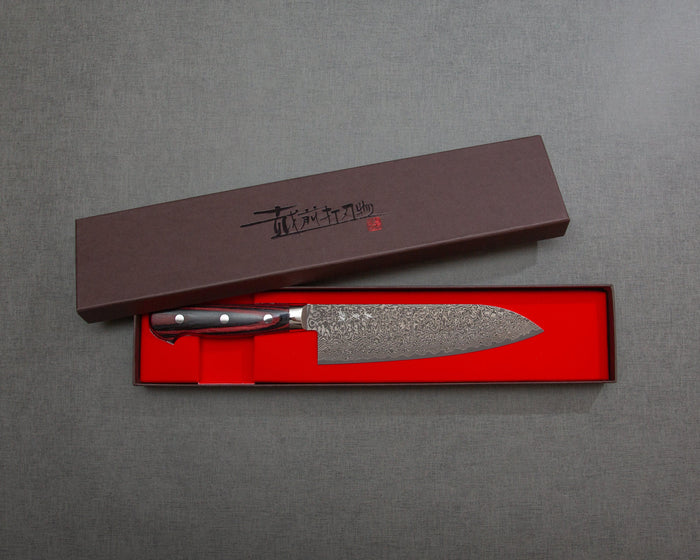
This handcrafted Kurosome Damascus Santoku by Yoshimi Kato is hand-forged with VG10 core steel, with 63-layer black-etched Damascus cladding. The edge geometry and distal tapering are amazing and the blade is extremely thin behind-the-edge. The fit and finish of this knife are superior, with everything beautifully polished.
Spec:
- Origin (Made in): Echizen, Fukui Prefecture, Japan
- Brand: Yoshimi Kato
- Craftsman: Yoshimi Kato
- Knife Type: Santoku
- Blade
- Construction: San Mai
- Grind: Double-edged Blade (50/50 Grind)
- Hagane (Core Steel): VG10
- Jigane (Cladding): Stainless Steel
- Hardness: 61 HRC
- Hand-forged, hand-ground, hand-sharpened
- Blade Finishes:
- Damascus
- Kurosome (Black Etched)
- Blade Length: 180mm (7.1")
- Blade Height (at heel): 46mm
- Spine Thickness
- Above heel: 1.8mm
- Middle: 1.7mm
- Handle
- Shape: Western-shaped
- Material: Red Pakka Wood
- Bolster: Stainless Steel
- Length: 120mm
- Overall Length: 304mm
- Weight: 152g (5.36oz)
- Hand Chiseled Mark: In Japanese Kanji "Yoshimi Echizen" (義実 越前)
About Yoshimi Kato 加藤 義実
Yoshimi Kato (aka. Yoshimi Katou) is a renowned blacksmith in Echizen, Fukui Prefecture, and the 3rd generation Kato. Head of Kato Uchihamono, formerly known as Kintaro, Mr. Kato has apprenticed under his father - 2nd generation blacksmith - Hiroshi Kato for many years before taking over the family business. Mr. Kato is a master of heat-treating high-end steels such as SG2 and Aogami Super. His hand-forged Damascus is mesmerizing and his tsuchime finish aesthetically pleasing. Kato knives have a great reputation for being the finest example of Echizen craftsmanship.
Care:
Wash and dry with a soft sponge, and safely store after use. Avoid cutting into bones, frozen foods, hard fruit pits.
Cutting Surface:
Recommended cutting surface: wood, rubberized boards and high-end composites, and quality plastics such as polyethylene make acceptable cutting surfaces, and will help protect and prolong knife’s edge. AVOID glass, metal, countertops, and other rigid, non-forgiving surfaces.
Sharpening:
We recommend sharpening all quality Japanese knives on whetstones, as we believe they yield the best results for your knives.
Share